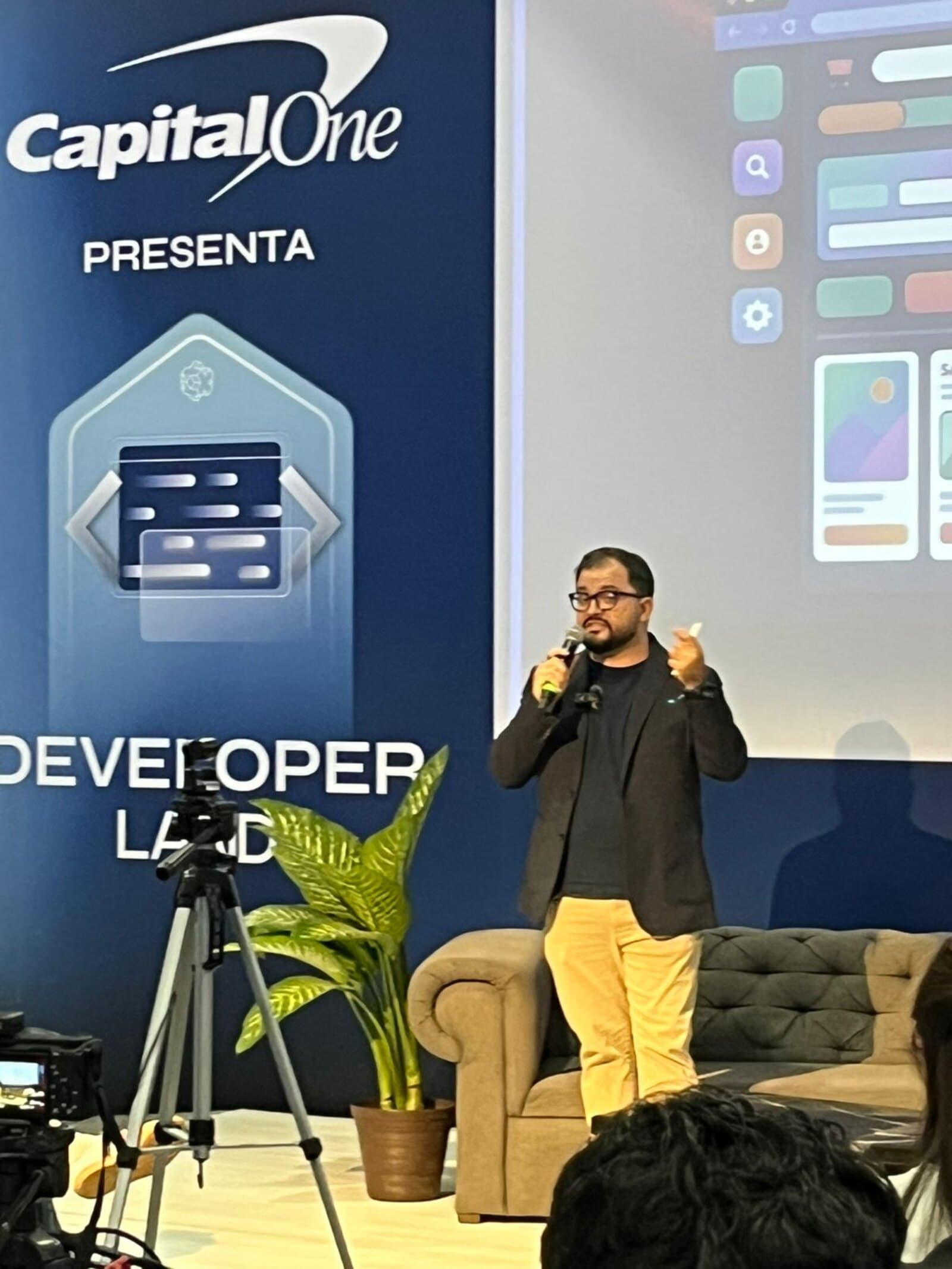
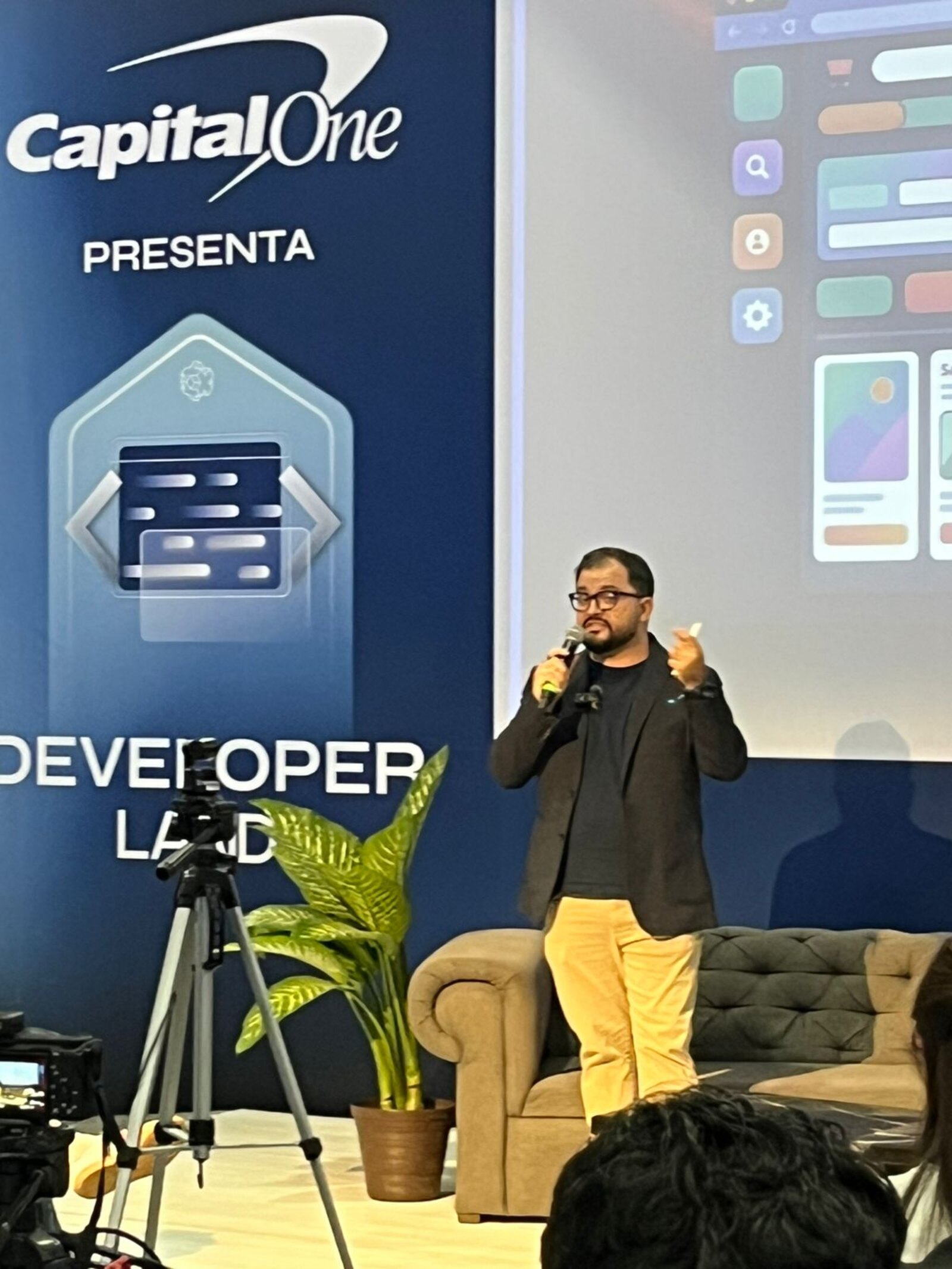
In April 2026 Talent Land moved to Mexico City and I took the Developer Land stage to say one thing: software stopped being something machines execute. It's now something people and agents negotiate. That's where I presented SwarmMind.
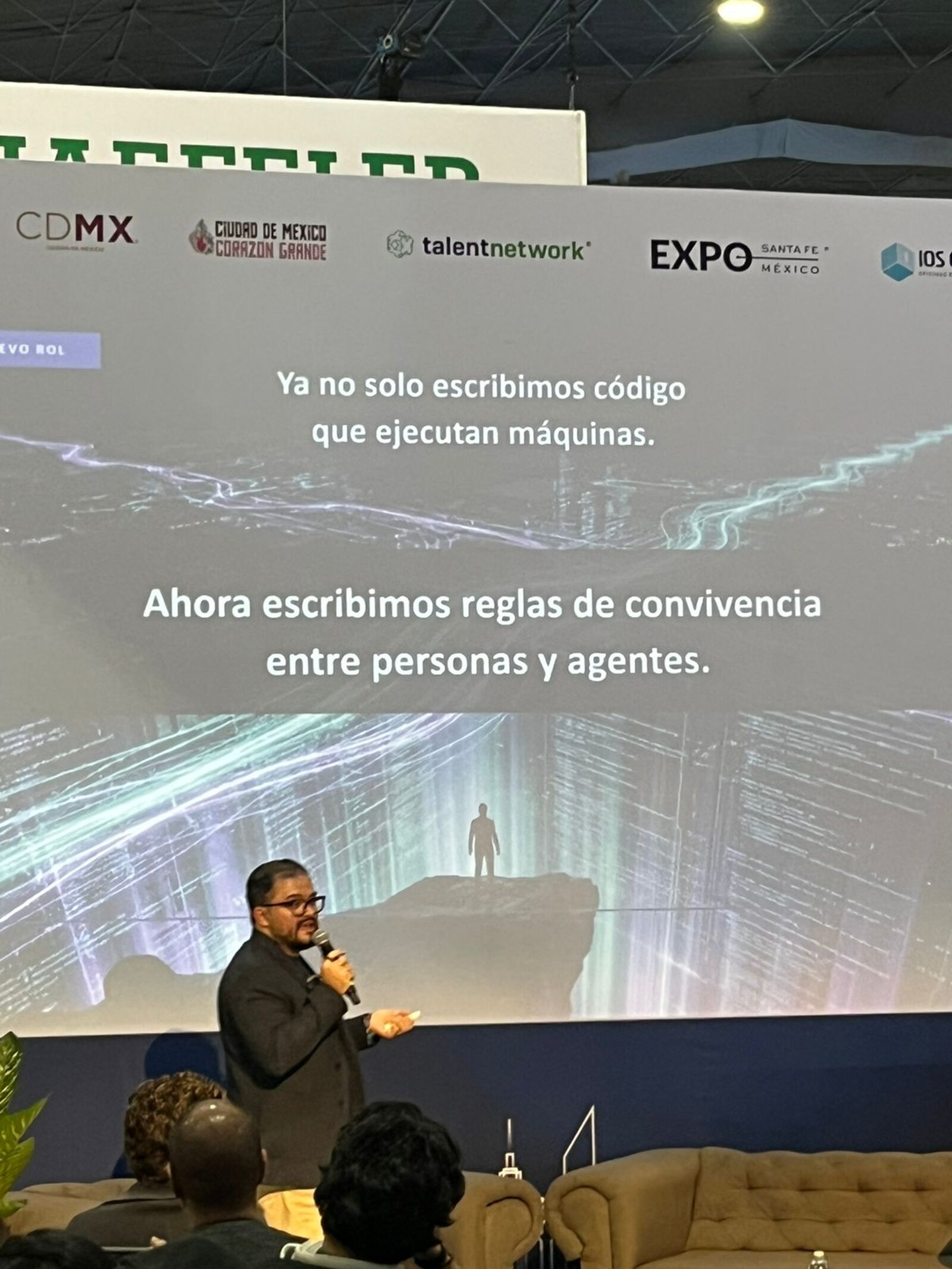
The line I put on the screen
The whole talk fit on one slide:
"We no longer just write code that machines execute. Now we write the rules by which people and agents live together."
For sixty years, programming meant giving instructions to something that obeys. An if always holds. A function returns the same thing for the same input. The machine has no opinion.
An agent does. It interprets, decides, gets things wrong, insists. And once you have several, they start getting in each other's way. That isn't solved with logic anymore: it's solved with rules for coexisting. Who can do what. Who wins when there's a conflict. When a human has to be asked.
It's a change of craft, not of tool.
Three ways of working that already coexist
1. Agents that work for us
The one everyone knows, and the only one most people have tried. You ask a model for something and it does it: summarize, write, classify, answer. A human gives an instruction and an agent executes it.
It works well and it has a low ceiling: you're still the bottleneck. Every task needs someone to ask for it.
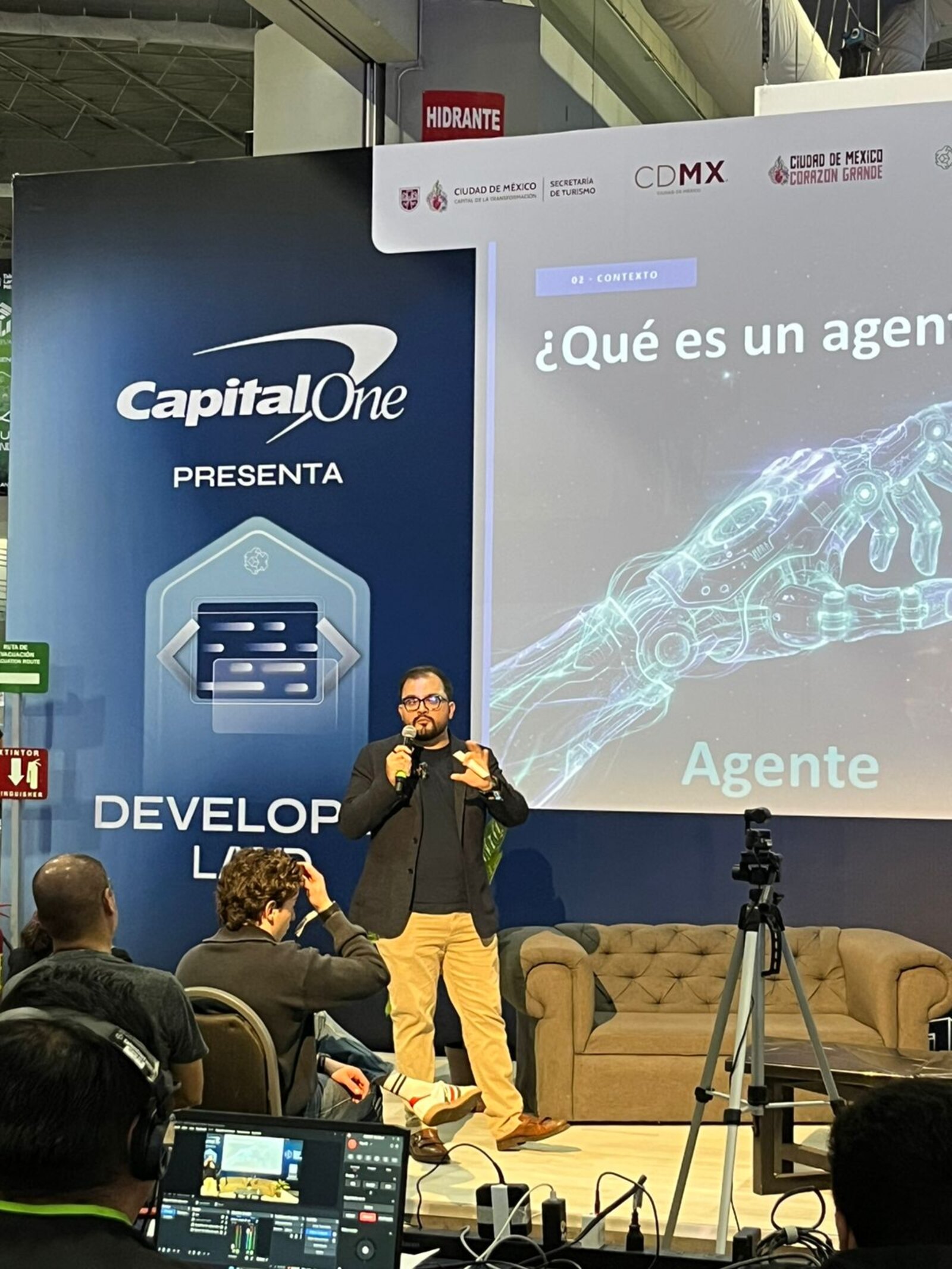
2. Agents that work with each other
This is where it gets interesting and where almost nobody has arrived. One researches, one writes, one reviews, one publishes. Nobody tells them the order: they sort it out.
The problem is that today, when someone puts several agents together, the glue is a human copying one's output to paste into another. That isn't automation, it's being the manager of a team that doesn't talk to itself.
3. Agents that work with humans
The one I care about. Not a human supervising robots, but both in the same space, each doing what they do best. The agent executes and proposes; the person decides what carries consequences.
SwarmMind: giving them somewhere to work
For the third part I showed SwarmMind, which two months earlier had won me the Most Innovative Use Case award at a hackathon in the 500 Global offices in Palo Alto.
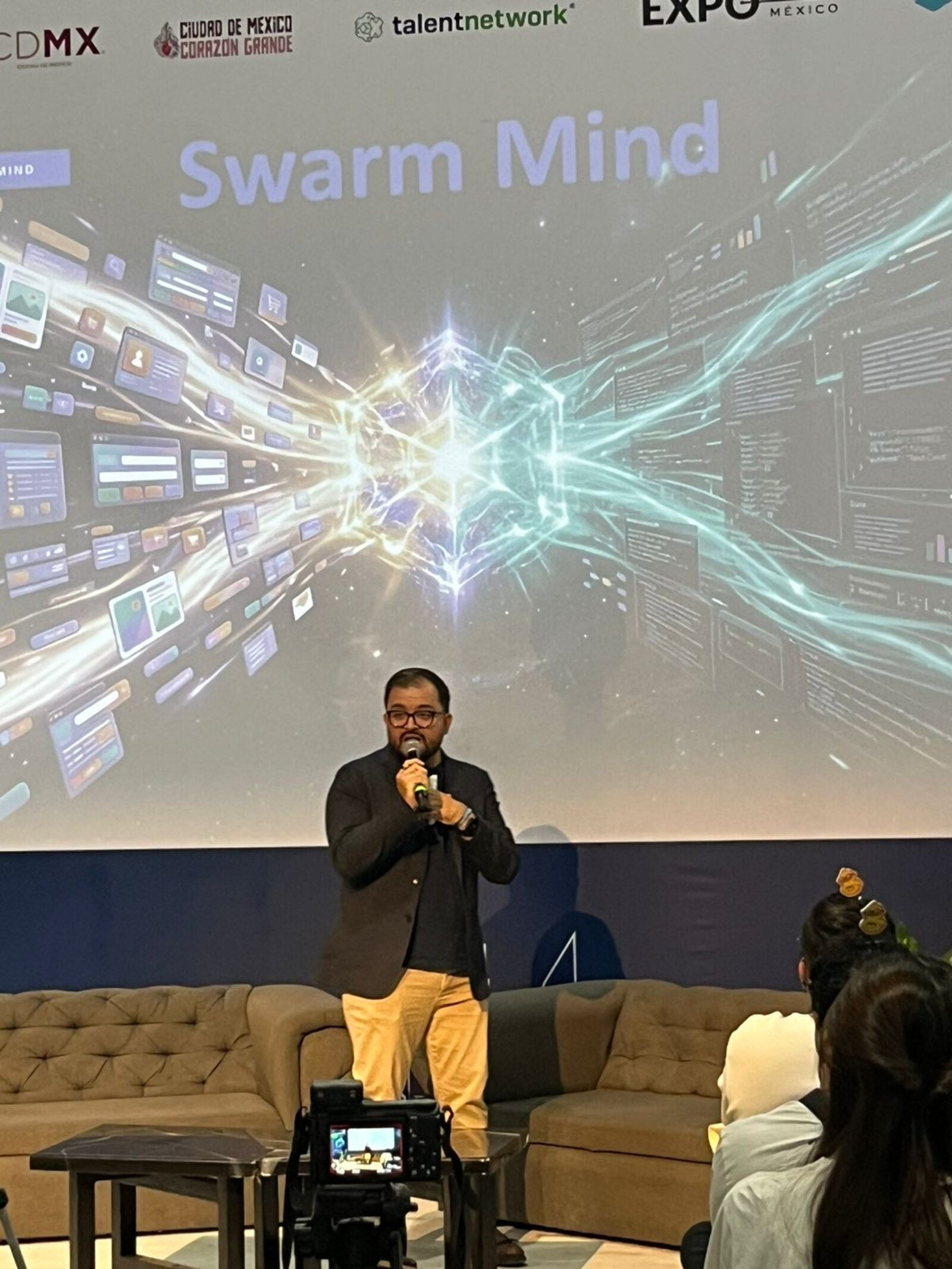
The idea is old, which is why it works: a Kanban board where the workers are agents. They register with their capabilities, join teams, pull cards, move them across columns and hand them to each other. The human doesn't assign tasks: the human watches the board.
We humans solved that coordination problem decades ago. Columns, cards, everyone pulls what they can, everyone sees the state. The only strange thing about SwarmMind is who's on the other side of the card.
And the important part: it isn't tied to any platform. An agent from Hiveflow, one from n8n and one from another tool can all be on the same team. The board is the common language.
What was out on the expo floor
I walked out of the talk and ran into humanoid robots moving among the crowd. That isn't a coincidence: it's the same conversation in a different body.
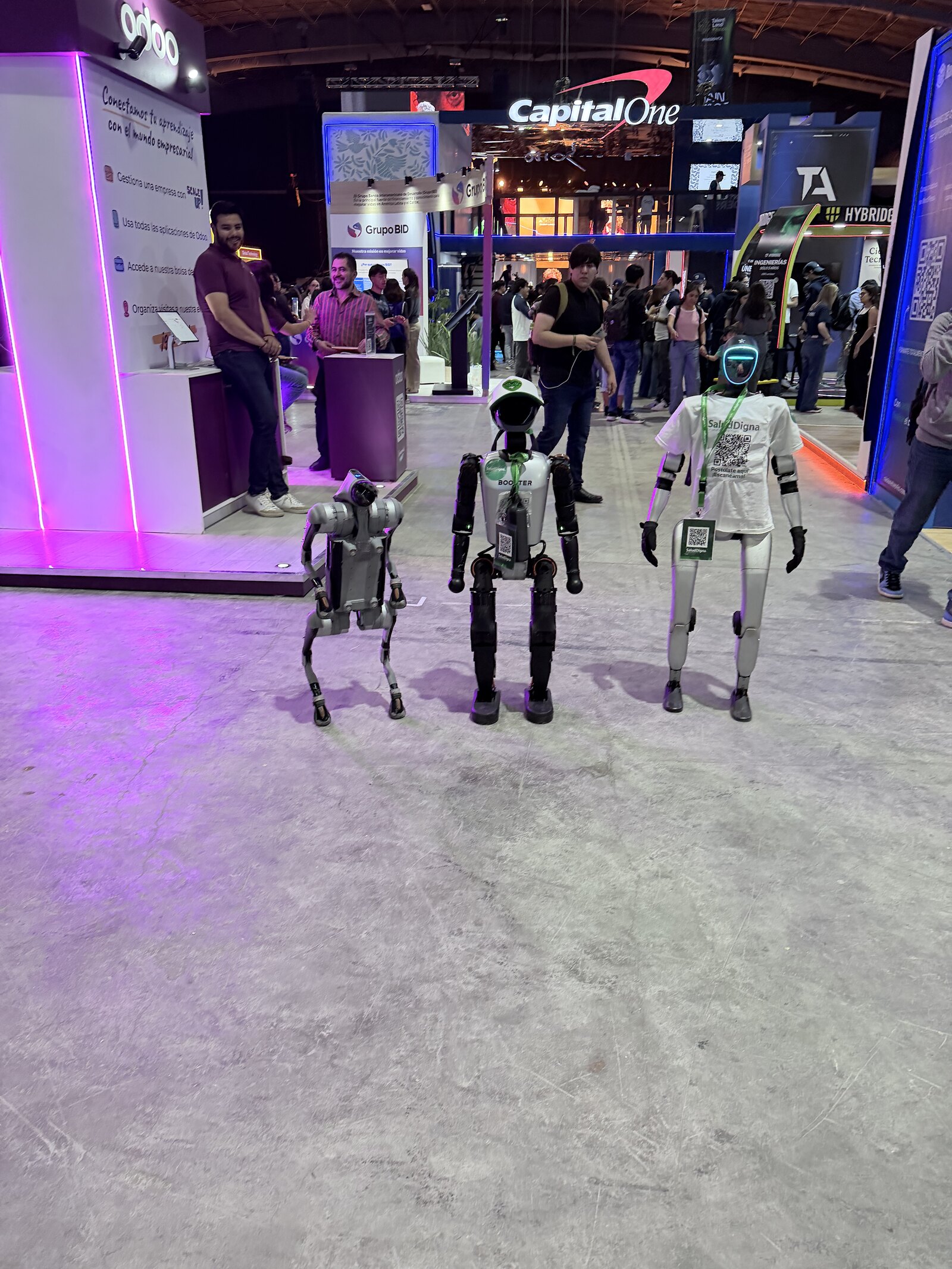
A robot walking down a corridor full of people needs exactly what a software agent inside a company needs: to know who it is, what it's allowed to do, who it asks when unsure, and what to do when someone steps in front of it. Rules for coexisting.
Why this talk in Mexico
Talent Land had been in Guadalajara for years and moved to Mexico City in 2026. I'd already been at the 2025 edition with four talks. Coming back was an easy decision.
It's the event where I speak Spanish at the largest scale, and it's where this point makes the most sense: the advantage of arriving late to a technology is that you get to skip the stage of doing it badly. Latin America doesn't have decades of legacy systems to migrate. It can build for agents directly.
Frequently asked questions
What was John Olven's talk at Talent Land 2026 about?
About the future of work with artificial intelligence in three forms: agents working for us, agents working with each other, and agents working with humans. He gave it on the Developer Land stage, presented by Capital One, at Talent Land México 2026 in Mexico City.
What is SwarmMind?
An open-source Kanban board where the workers are AI agents: they register with their capabilities, form teams, pull cards and collaborate with each other while a human supervises the board. It won the Most Innovative Use Case award at a hackathon at 500 Global, Palo Alto, in January 2026.
Where was Talent Land México 2026 held?
At Expo Santa Fe, Mexico City, in April 2026. It was the first edition held outside Guadalajara.
What does "rules by which people and agents live together" mean?
That programming stopped being about giving instructions to something that always obeys. An agent interprets and decides, and once there are several they need rules: who can do what, who wins in a conflict, and when to escalate to a human. That isn't solved with logic, it's solved with governance.