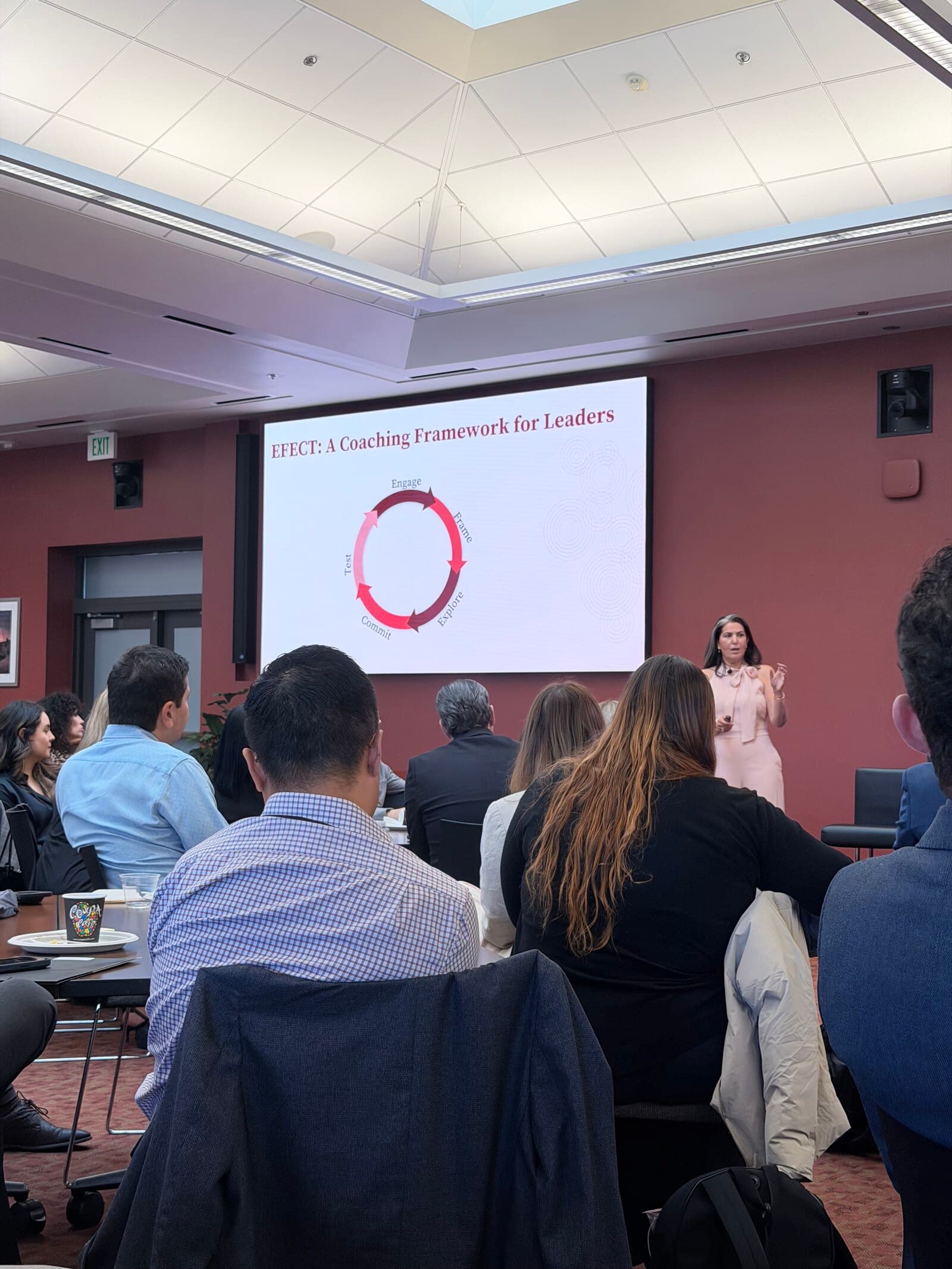
Hiveflow was selected by LBAN, the Latino Business Action Network, for its program at Stanford. I graduated in May 2026 at the Knight Management Center of the Graduate School of Business. And the most useful thing I took away wasn't what I learned: it was finding out how much of what I already knew, I had learned the most expensive way possible.
What LBAN is
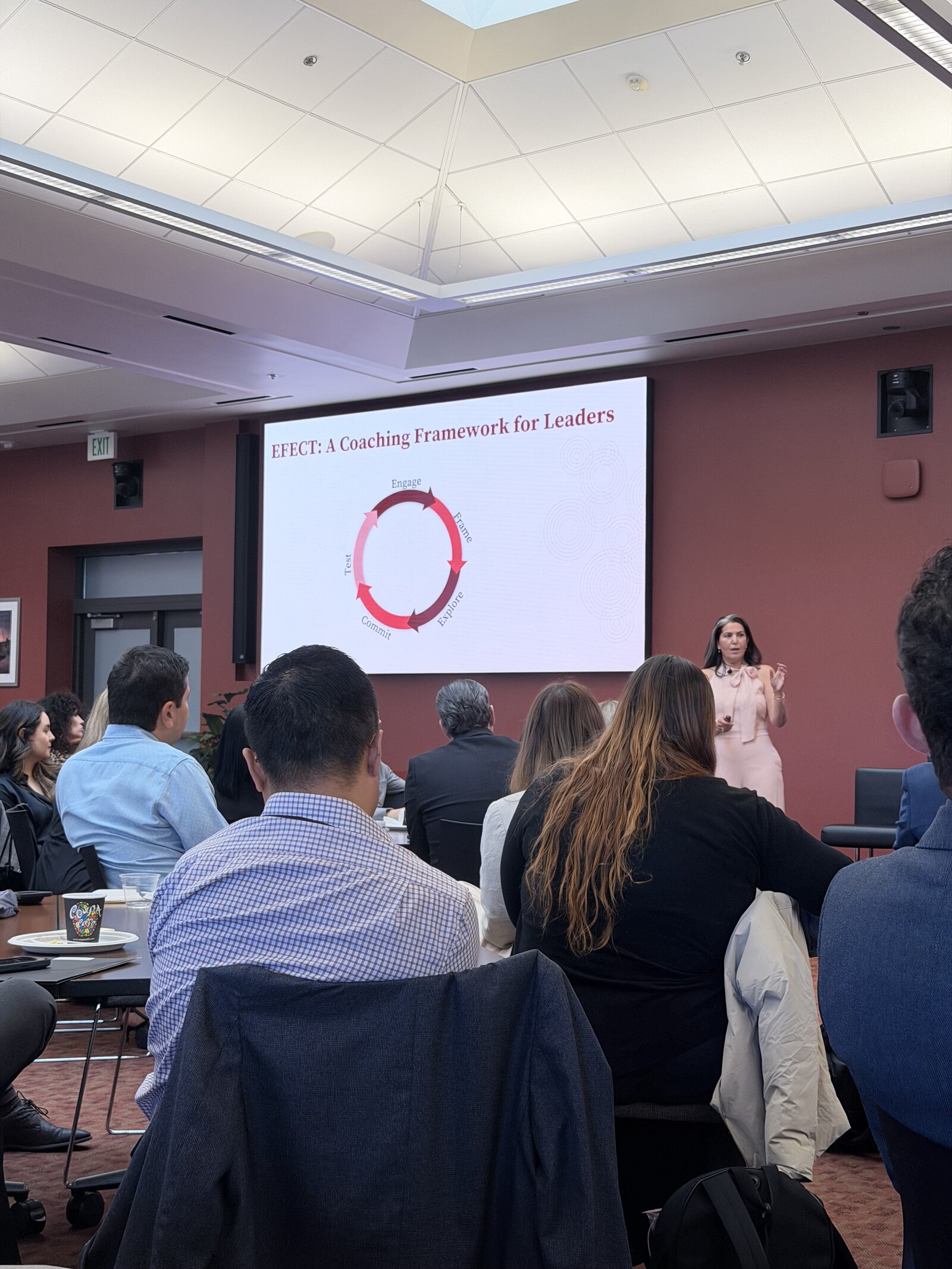
LBAN is the Latino Business Action Network, and its program at Stanford is an accelerator for disruptive technology startups from Latin America. Hiveflow was selected and I joined the 2026 cohort.

What makes it different from a normal accelerator: the classes are taught by professors from Stanford's Graduate School of Business. Not mentors, not operators who passed through. Professors who have spent decades studying why some companies scale and others don't.
What happens when you sit in that room
I'll tell the uncomfortable part, because it's the useful one.
You arrive with years of hands-on experience. You've made expensive mistakes, corrected them, made new ones. You think you know things. And then a professor explains to you in forty minutes, with a framework and three examples, exactly what took you two years to learn by stumbling.
It isn't pleasant. It's extremely useful.
And it isn't that the class teaches you something you didn't know. It's that it gives a name to something you'd already lived, and once it has a name you can use it deliberately instead of by accident. That was the whole shift in mindset.
Jeffrey Pfeffer — 7 Rules of Power
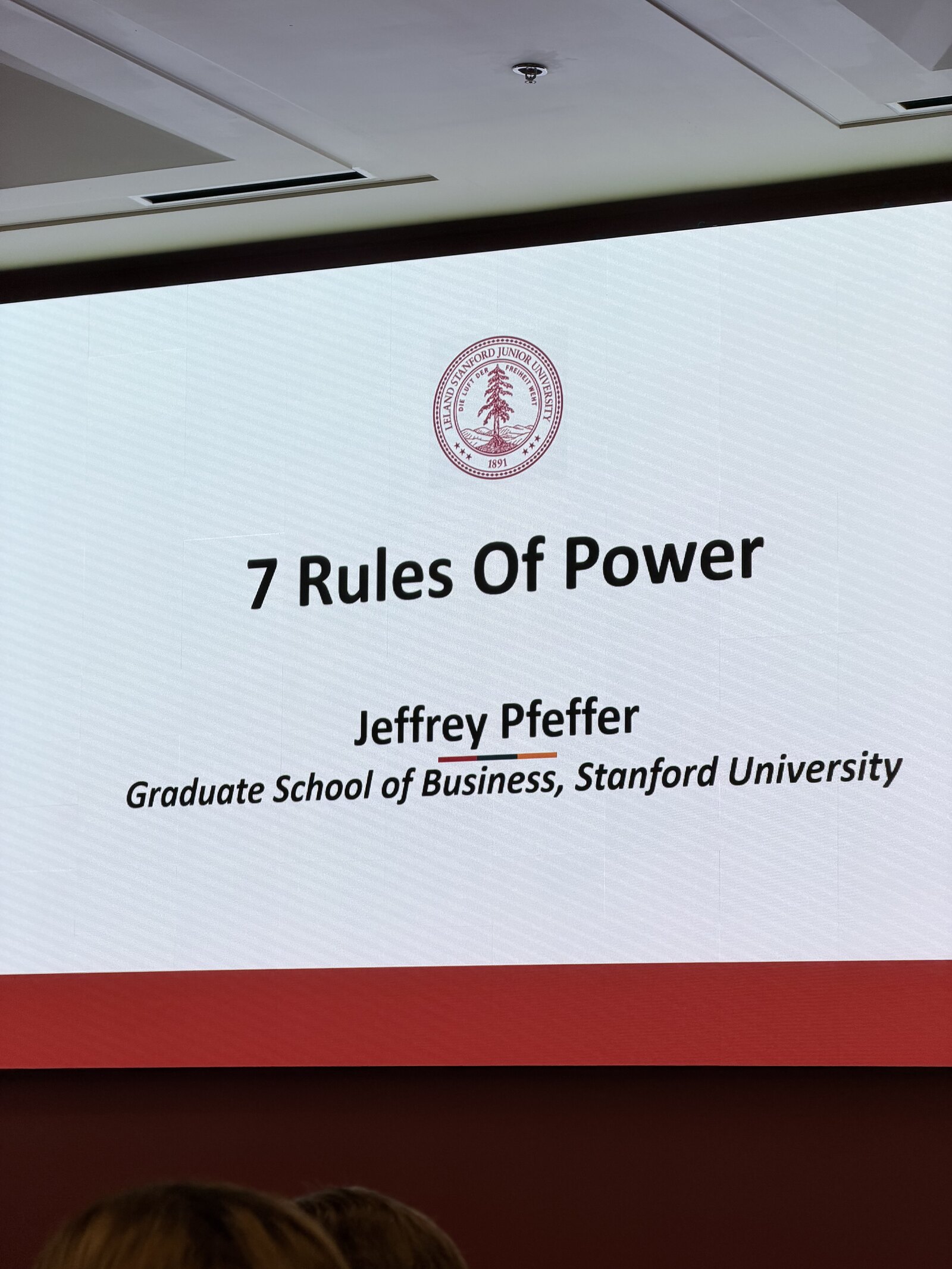
Rule 1 is the one that hit hardest: Get out of your own way. The idea is that most of the limits a founder believes are external —the market, the timing, the competition— are self-imposed and self-described. You describe yourself a certain way and then act accordingly.
As a solopreneur that lands differently. When you build alone, nobody contradicts you. Your own beliefs about what you can and can't do have no one standing in front of them.
Robert E. Siegel — The Systems Leader
"This new world requires a new kind of leader." The thesis is that being good at one dimension —product, or sales, or technology— is no longer enough: you have to hold opposing tensions at once. Execute today and innovate for tomorrow. Move fast and not break trust.
That's exactly the problem of a company building AI agents: you have to move fast on something people don't yet know whether they can trust.
George Foster — Alternative Growth Strategies of New Ventures
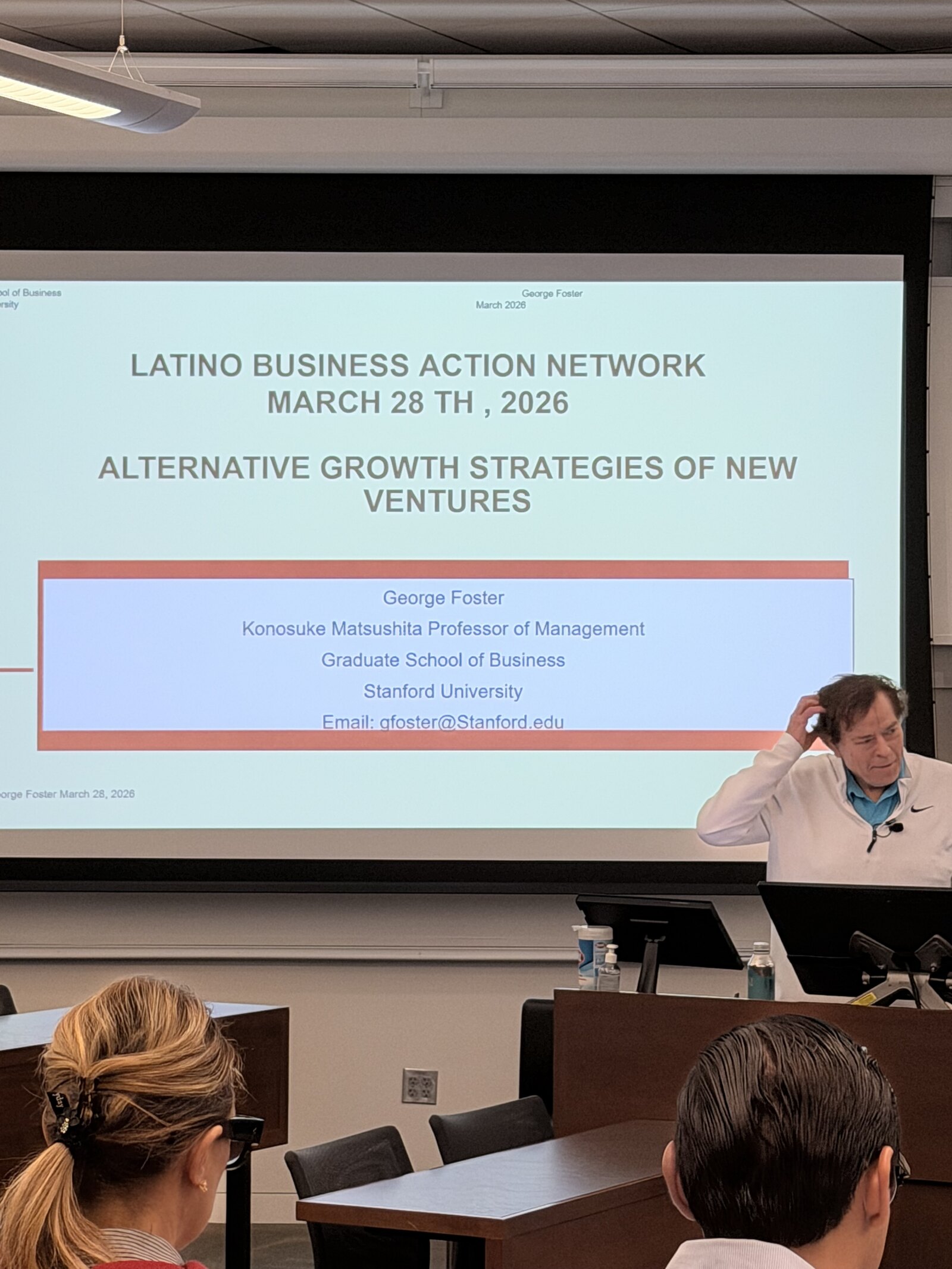
Foster is the Konosuke Matsushita Professor of Management at the GSB. His session was about growth paths that aren't the obvious one: that raising a round isn't the only way to scale, and often isn't the best one.
That message, delivered at Stanford, carries particular weight. It's the last place you'd expect to hear it.
What I valued most wasn't the class
It was the hallway.
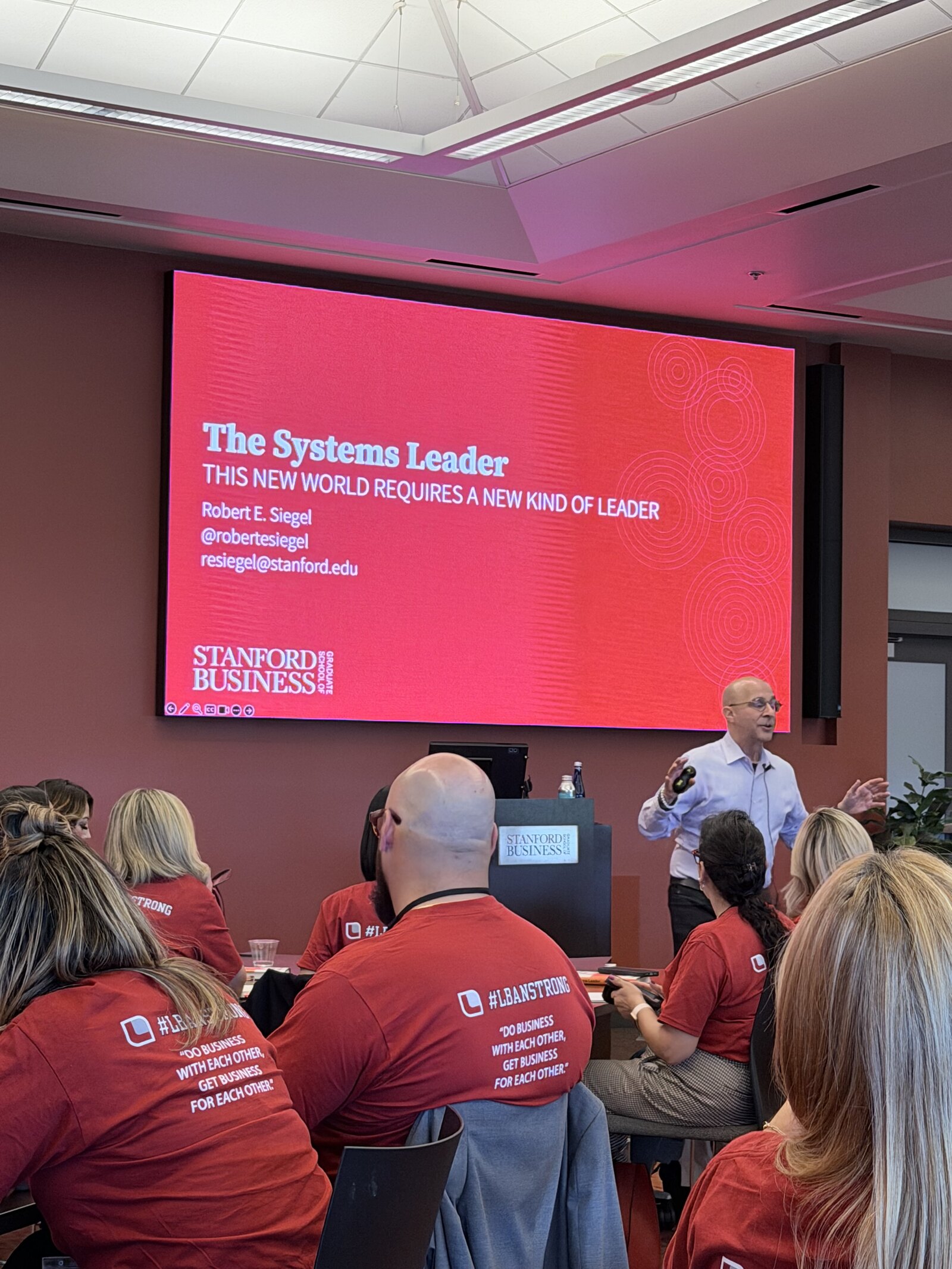
Being on campus, surrounded by people from Latin America who are running their companies in the United States. Not people who want to do it someday: people who already bill, already hire and already fight the same things you do.
That solves a problem reading can't: calibration. When you build from Mexico it's hard to know whether your problem is normal or yours. In that hallway you find out in five minutes.
Graduation

May 31, 2026, at the Knight Management Center. A stone sign I'd seen a thousand times in other people's photos.
I'm not telling it for the photo. I'm telling it because there's an uncomfortable message in the fact that a program for Latino startups has to exist: it means the access wasn't there. And there's a good one: that those of us who went through it now have a concrete obligation to hold the door for whoever comes next.
Frequently asked questions
What is LBAN?
The Latino Business Action Network, which runs an acceleration program at Stanford for disruptive technology startups from Latin America. Classes are taught by professors from the Graduate School of Business.
Which startup was selected?
Hiveflow, the operating system for creating and managing AI agents built by John Olven. It joined the 2026 cohort and graduated on May 31, 2026 at Stanford's Knight Management Center.
Which professors taught?
Among others, Jeffrey Pfeffer (7 Rules of Power), Robert E. Siegel (The Systems Leader) and George Foster, Konosuke Matsushita Professor of Management, with a session on alternative growth strategies.
Is this the same as studying at Stanford?
No, and it's worth stating precisely: it's an LBAN program taught at Stanford by Graduate School of Business professors, not a university degree.