
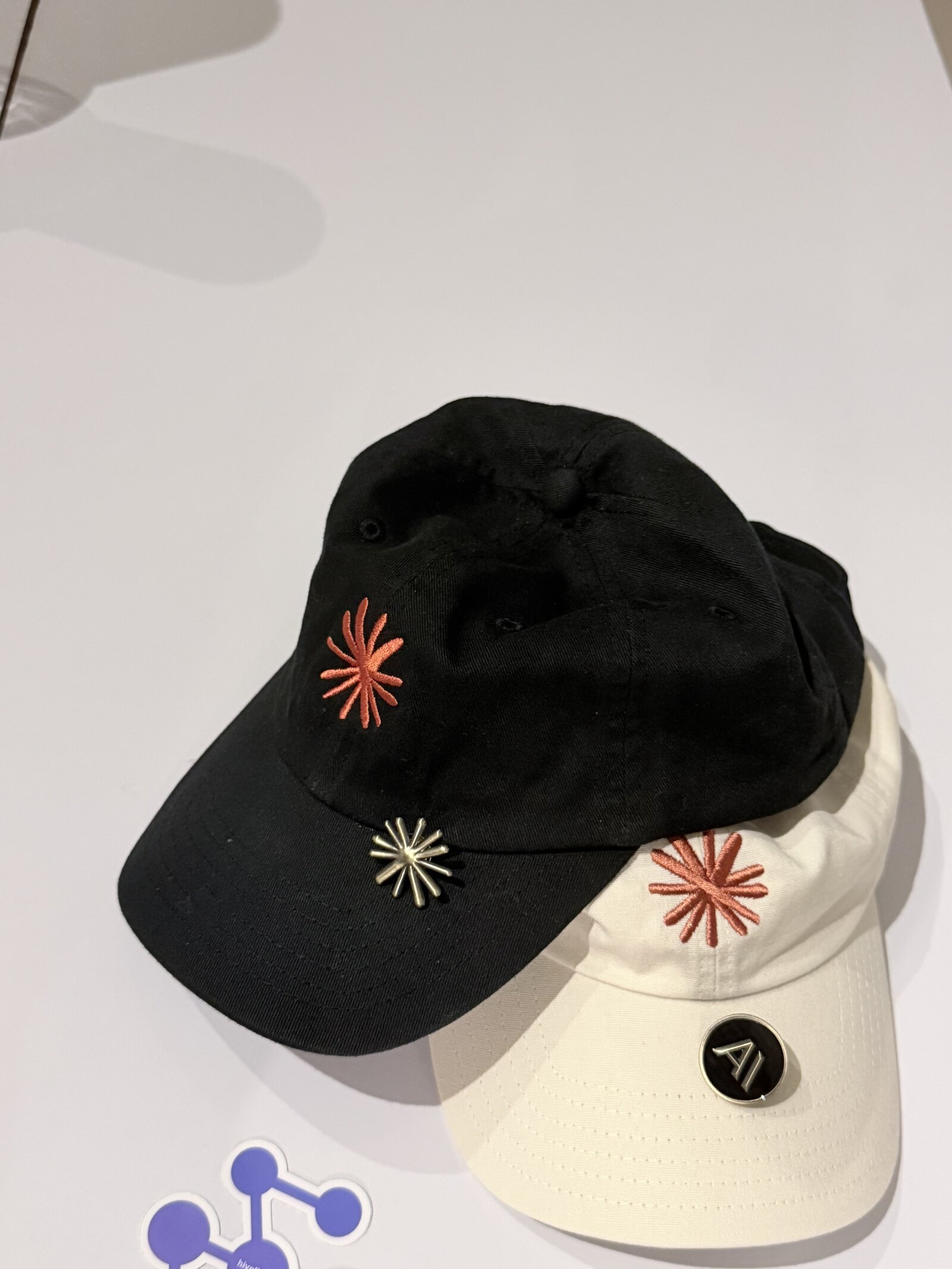
Hiveflow is an Anthropic partner. And before that, in March 2026, we were invited to their offices in San Francisco. Here's what each thing means for anyone using Hiveflow, and what I took away from being inside.
What being a partner means
The concrete part, without decoration: it opens direct contact with Anthropic for our clients, through us.
Anthropic makes Claude and Claude Code, and today has the strongest models on the market for programming. If your company is building agents that write or review code, that isn't a detail: it's the difference between an agent that helps you and one that creates work for you.
Now, I want to be clear about something, because it's part of Hiveflow's thesis:
Being an Anthropic partner doesn't marry us to Anthropic. Hiveflow is genuinely multi-LLM: it runs on OpenAI, Google, Perplexity, Anthropic, and also on open-source models inside your own infrastructure. A formal relationship with one of them doesn't reduce the client's options; it adds a door.
An orchestrator that only knows how to talk to one provider isn't an orchestrator. It's a reseller.
The offices
In March we were invited to their San Francisco offices for an event. Two things stayed with me.

First, the atmosphere. You expect a science-fiction lab and you find bookshelves, armchairs and a mountain photograph. It looks more like a library than a server room. That says something about how they work.
Second, and this is the one that made me think: there's security everywhere.
They're building frontier models and they're cautious about it. I'm not going to give details —it would be disrespectful and it's the exact opposite of what they protect— but I will say why it struck me as relevant.
What the caution says about the industry
It's easy to talk about AI safety on a panel. It's different to see it turned into procedure, into access controls, into how people move through a building.
And it connects directly to what I build. When an AI agent operates inside a company —touches the CRM, sends messages, runs code— the problem stops being how smart the model is and becomes what it's allowed to do. Identity, permissions, a gate before every action, a log nobody can rewrite.
Seeing that same logic applied to the physical building of the people who make the models was, for me, the clearest confirmation that we're on the right track.
Three, two, one
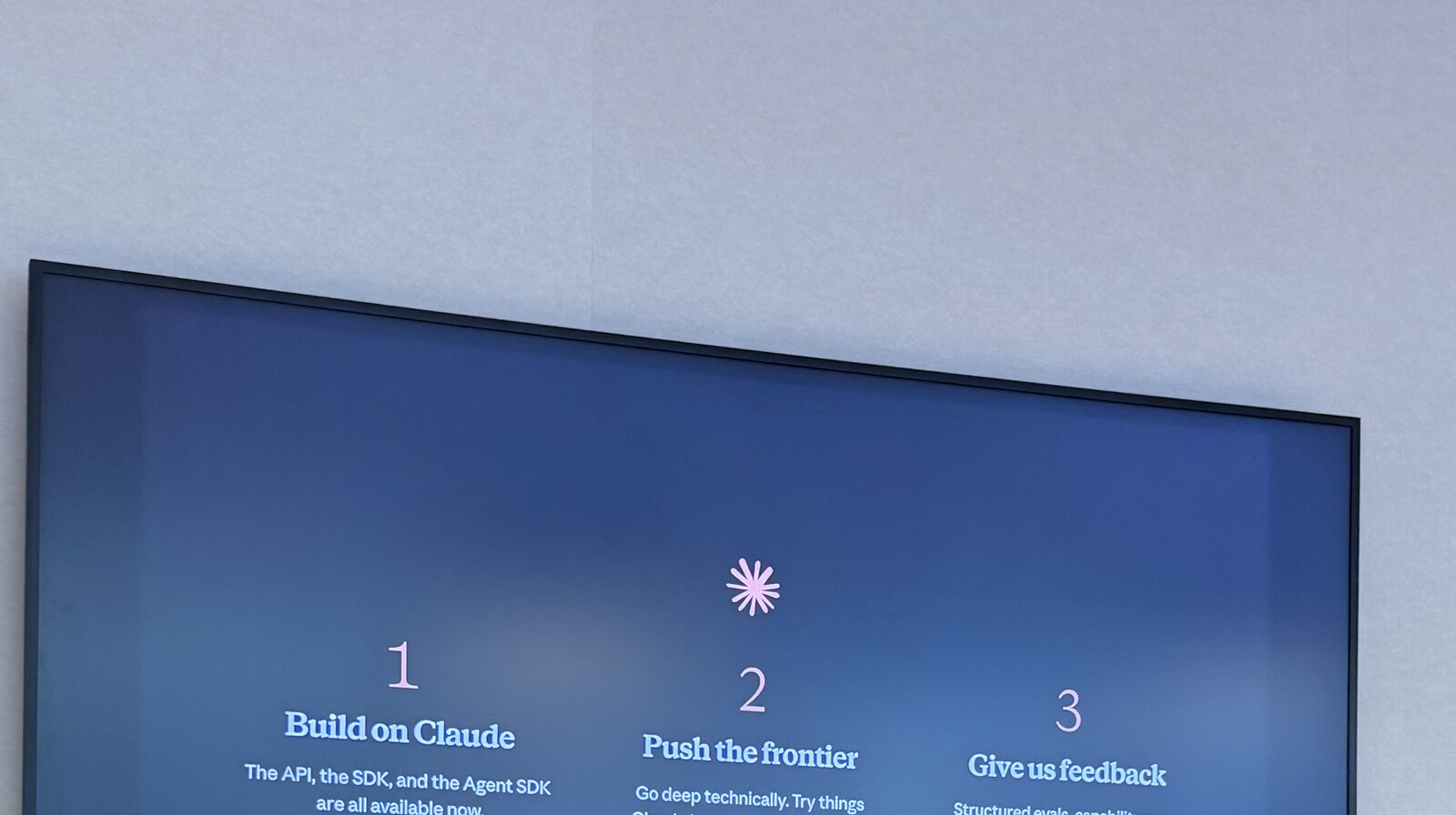
The event slide had three points: Build on Claude. Push the frontier. Give us feedback.
It sounds like corporate messaging until you notice the third one is the odd one out. Almost no infrastructure provider asks you, on the same slide, to push it to its limits and tell it where it breaks. That's a product stance, not a marketing one: assuming whoever builds on top will find the edges before you do.
It's exactly the relationship I want with whoever uses Hiveflow.
What a Hiveflow user gains
Access to the best coding models through the relationship with Anthropic
Direct contact with them when needed, through us
Without getting locked in: if another model is better for your case tomorrow, you switch it on the canvas
That last point is the one I defend most. The industry moves every two months. Tying yourself to one provider today is making a decision on your own behalf that you should be able to revisit in March.
Frequently asked questions
Is Hiveflow an Anthropic partner?
Yes. That opens direct contact with Anthropic for Hiveflow's clients, through Hiveflow, and access to Claude and Claude Code, currently the strongest models on the market for programming.
Does that mean Hiveflow only uses Claude?
No. Hiveflow is multi-LLM: it runs on OpenAI, Google, Perplexity and Anthropic, plus open-source models on the client's own infrastructure. The Anthropic relationship adds an option, it doesn't remove the others.
What is Claude Code?
Anthropic's tool for programming with Claude from the terminal, built for real development work against a codebase.
What can be said about Anthropic's offices?
Little, deliberately. They're cautious about security because they're building frontier models, and respecting that is part of working with them.